

13 Jul Remembering Older Baselines
14 July 2026
By David Allen, Development for Conservation
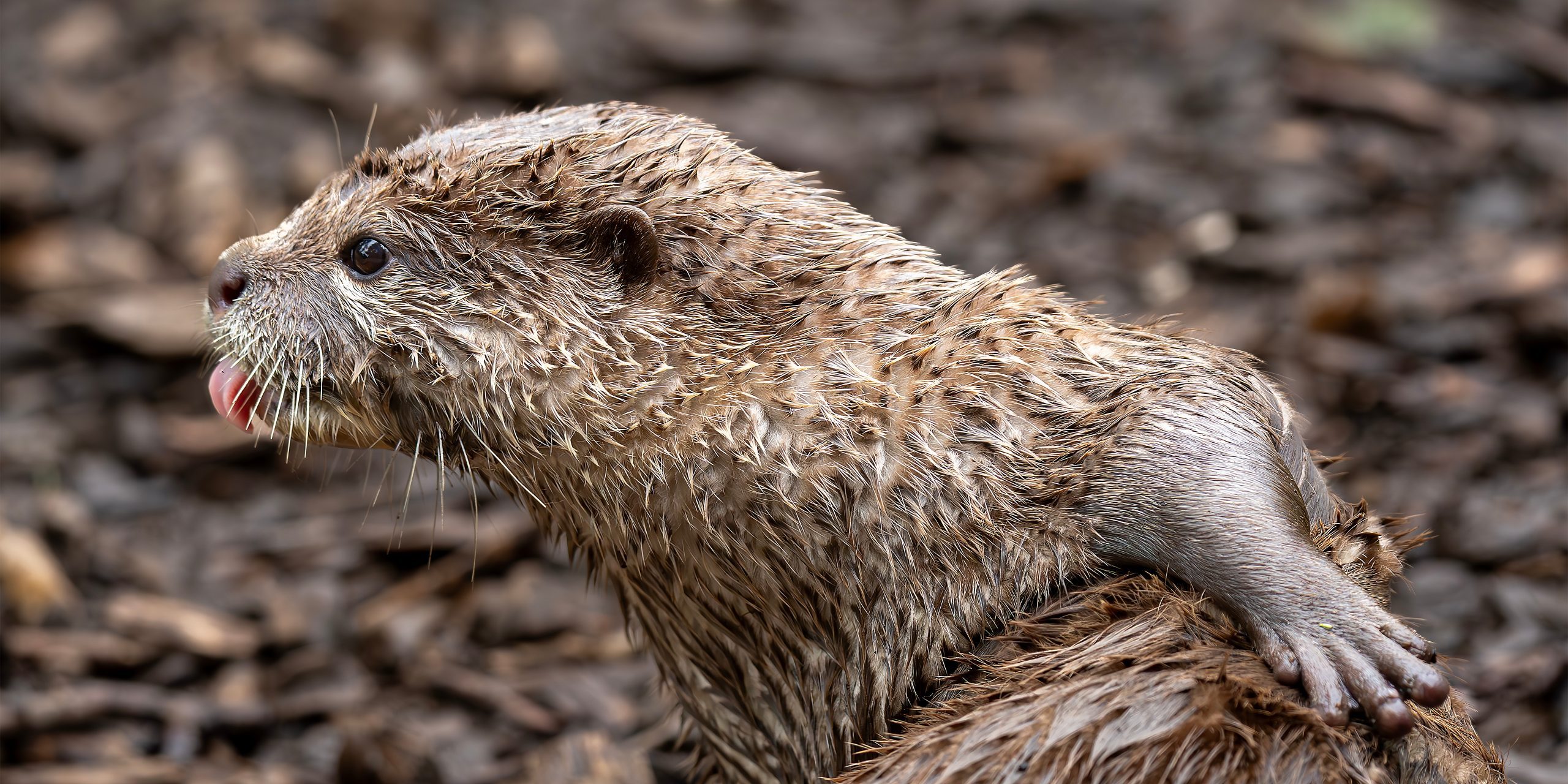
My wife and I recently moved from Wisconsin to North Carolina. We used to live in a suburb of Madison called Monona and about a block off the Lake Monona. For most of the 30 years we lived there, our neighbor next door was Ralph Schweppe. Ralph had lived in the Madison area all his life. As a young man, he trapped muskrat along the swampy lakeshore that is now highly desirable shoreline property just down the street from us.
Ralph passed away in 2015 at the age of 94. It occurred to me when he died that he was probably one of just a very few who remembered that the lakeshore was once swampy and populated by muskrat.
And now Ralph is gone.
With Ralph’s passing, another community baseline changed. I lived there more than 30 years and I never knew a time when muskrats were there. When the neighborhood basements flooded in an early 2000s storm, the City committed to new water control engineering which was gradually put into place over the next decade. It won’t be long before people living in my former community won’t remember a time when that neighborhood flooded – that the neighborhood ever flooded.
It isn’t hard to extrapolate from there to other baseline experiences that have changed.
- The tax bracket for the wealthiest Americans was 90% as recently as the 1970s.
- The Bald Eagle was once on the brink of extinction.
- The Colorado River once emptied out into the Sea of Cortes.
- Fresh water from Waukesha County (in Wisconsin) was touted at the World’s Fair in 1883 as “the purest and most healing in the world.”
- Native tallgrass prairie in the Midwest once boasted more than 340 species of grasses and forbs.
- When I was a kid vacationing in Rocky Mountain National Park, we often drank water directly from the stream.
The baselines have changed – are continuously changing. Most of us – the majority of us – grew up never knowing these things were ever possible or even there. And we don’t and won’t care much about things we never knew.
Which brings me to a marketing question. If a majority of the “public” have forgotten that there were once swampy shorelines, cathedral forests, prairies with more than 340 species of plants in them, and stream water clean enough to drink without filtering – if these things were never part of their collective lived experience – how will they ever prioritize giving money to support land conservation?
Put another way, land trusts have a set of tools that are uniquely suited to addressing several of society’s most pressing problems – climate change mitigation, habitat loss, fragmentation, clean air and water. But their solutions won’t get the support they need if the “public” doesn’t perceive the problems or at least doesn’t see them as “pressing” compared with other problems. Our collective “loss” is only loss when compared to our lived experience.
I am reminded of a cartoon I saw in the 1990s in Oregon during the Spotted Owl debates. (Anyone remember the Spotted Owl?) The cartoon showed two pie charts. The first was divided into thirds with one third colored in. The caption read: “This is all the old growth we want to cut.” The other was divided into tenths. One of the tenths was further divided into thirds, with one shaded in. This caption read “This is all they want to cut.”
It’s all about the perception of the baseline.
I’ve put the word “public” in quotes in the above paragraphs, because many land trusts include “public” education among their mission priorities. But we don’t always include former baselines.
I think we need a different focus on public education and outreach. We need our programs to help “the public” see land trusts as useful tools for communities to use in addressing problems. And that means we need our public education programs to help people see the problem(s). And that means helping them see baselines from longer ago than their own lifetime. Land acknowledgements are helping move us in that direction, but we need a natural history equivalent also.
This entire shoreline was once a vibrant swamp and home to …
The grasses and forbs in this prairie were once so tall that riding a horse felt like you were wading …
In 1963, there were just 400 nesting pairs of bald eagles in the lower 48 states …
We used to be able to drink the water right from this stream …
People used to swim in this river …
In 1979, the top tax bracket was 90% …
And we need old people. We need people who have lived here all their lives and remember a different baseline than we do. Back when there weren’t houses built right on the shoreline. Back when the muskrats lived in the swampy areas.
We need to hear the stories.
Before all the Ralph Shweppes are gone.
Cheers, and have a great week.
-da
PS: Your comments on these posts are welcomed and warmly requested. If you have not posted a comment before, or if you are using a new email address, please know that there may be a delay in seeing your posted comment. That’s my SPAM defense at work. I approve all comments as soon as I am able during the day.
Photo by Chris Spracklen courtesy of Pixabay.
A.B.
Posted at 08:59h, 14 JulyThis is a message near and dear to my ever-aging heart that still flutters every time I catch sight of an eagle. Or muskrat, truth be told.
Lisa Smith
Posted at 07:53h, 14 JulyThank you for this, David! A very helpful reminder, told with a great story, of what we need to be keeping in mind in our communications and appeals. Lisa Smith, Executive Director, Natural Areas Association.