

05 Jan Happy New Year! – Looking Forward
6 January 2026
By David Allen, Development for Conservation
(In case you missed it, I’m refreshing my request from last week: As a special favor to me, to you, and to other readers of this blog, I’d like to ask you to take a moment and choose ONE thing you are most proud of having accomplished in 2025 and share it in the comments. Collectively, we have done a great deal of good. Let’s take a moment and lean into that feeling before we get too wrapped up in what might or might not happen in 2026.)
Happy New Year!
Time to start again. January of new year.
This is part of a blog that I post every year right after New Year’s Day. I modify it slightly, and I add to it from time to time, but basically, it’s the same message. 2025 is over. Fa, sol, la, ti, Done.
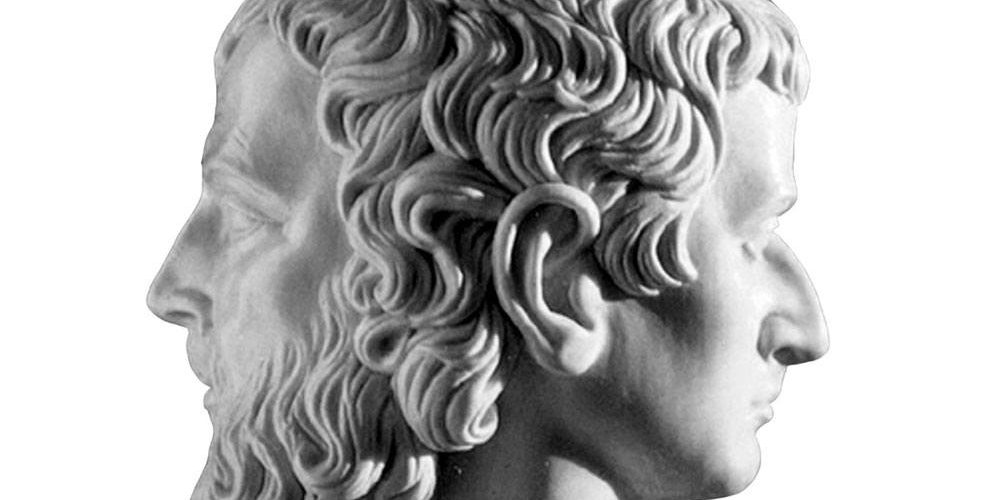
The month of January is named for the ancient Roman God Janus. Janus was always portrayed as having two faces: one looking backward into the past, and one looking forward into the future. In that sense, he was a doorway, a threshold, a passage.
As we cross our own threshold into 2026, January is both a good time for reflection and a good time for planning – to look back and to look forward. Last week’s post included some ideas for looking back. This week, we’re looking forward:
Commit to some version of the Best Possible Self Visualization (See the exercise in the post Hope and Optimism) to help you visualize meeting your goals for 2026.
Then make a plan.
For example: Adopt a Communications Theme
Here’s a sample formula for developing a communications theme for 2026:
- Make it a group process. Sure, it takes longer, but you will be dependent on everyone buying in and coming back to the theme with everything they produce as well. Engaging everyone up front will make everything more effective later.
- Review everything you produced last year, even if it wasn’t connected with an obvious theme. Lay it all down on a conference table and look at it as an outsider would. Was there an intentional theme? An accidental one? Is there a thread that could be followed this year? Do the pieces appear obviously to have come from the same organization?
- Take a look ahead to what will likely happen this year. Is there something that jumps out for you?
- Brainstorm (no bad ideas yet!) and develop as long a list of themes as possible. You’ll want to save this list; the ideas will be useful for starting the exercise next year as well. Then winnow, combine, and wordsmith. Be picky.
- Go with a single theme, rather than multiple themes or sub-themes. Less is more here. Having a theme does not constrain you to only writing and communicating about that topic, but it does mean that the theme should be more visible in your materials than other items. And it will get you thinking about how to connect everything. Repetition aids comprehension for your audiences. Having a theme running through will create the possibility for connection, convergence, and leverage. Your work will be more memorable, and more likely to be retained. Pro-Tip: want some help finding a theme? Look for one in your Organizational Values of Guiding Principles.
- Bring in Judy Anderson’s concept of “drip feed communications.” Plan a series of news stories and social media posts containing parts of a larger story. For example, if your theme is “Volunteer Engagement in Land Stewardship,” you might want to talk about land management challenges in February, restoration training and work days in May, work party results with before and after photos in August, and stewardship budget needs in the fall appeal (and thank you letters!). To the extent you can, calendar these communications.
- Make the theme internally visible – meaning post it in big letters on the wall where board and/or staff will see it and remind Board members of the theme at Board and committee meetings. Regularly ask yourself whether you can tell what the theme is just from reading some of the communications materials.
For example: Create a Development Calendar and post it on the wall of your office
I don’t need to sell you on the utility of calendars and to-do lists. But it still amazes me to learn how few people look farther ahead than the next six weeks or so. Think about starting a calendar for the entire year – and maybe even 15-18 months.
Look at the calendar you used in 2025 as a base. Many of the key dates and activities can simply be transferred onto the 2026 calendar. Board meeting and annual meeting dates, foundation grant deadlines, and Gala planning are all examples.
But also consider to promoting monthly giving in January and planned giving in July. Consider calendaring your paper newsletter and appeal deadlines.
And post the calendar on the wall. Electronic calendars are great, and I LOVE that I can access mine from multiple devices. Still, there’s something about seeing it every day – whether you intend to or not – that keeps the deadlines front of mind in s different way.
For example: Find a Transformative Gift Prospect – or five!
What would a transformative gift look like for your organization? A million dollars? $500,000? $100,000?
Whatever it is, there are probably several donors who could give that amount and might give it under the right circumstances. Name them. Think about each one individually. Why might s/he say YES? And what might YOU do during the year 2026 to make that more likely?
Make a Plan. Think in terms of building the relationship – not necessarily with YOU (that will be nice as well), but rather the relationship they have with the organization. How will they be engaged? How will they learn more about the organizational challenges and priorities? How will they increasingly see themselves being a part of the solutions?
What can YOU do to respectfully invite them?
Now make similar plans for four more donors.
You want to make plans for at least five donors because you want to hedge your bets on at least one saying yes. You also want make these plans because of what it does for YOU. Treated as individuals, donors are people. Not just ATMs to “appeal” to every October.
Remembering throughout 2026 that relationships matter will be transformative even without the financial success.
I’ll leave you with this from the New York Times:
In 1938, researchers at Harvard set out to learn what makes a person thrive.
They recruited 724 participants, a combination of students at Harvard College and low-income teenage boys in Boston. All were willing to let the researchers track their lives, from childhood troubles to first loves to final days.
Every five years, the researchers gathered health records from the participants. They asked detailed questions about their lives at two-year intervals, and, in later years, took DNA samples and performed brain scans. Twenty-five of the participants even donated their brains to the study after their deaths.
Now, 85 years later, the Harvard Study of Adult Development has expanded to three generations and more than 1,300 descendants of the original subjects; it is, according to the researchers, the longest-running in-depth study on human happiness in the world.
From all the data, one very clear finding has emerged: Strong relationships are what make for a happy life. More than wealth, I.Q., or social class, it’s the robustness of our bonds that most determines whether we feel fulfilled.
If you’re going to do one thing this year to ensure your own health and happiness, the authors maintain, find the time to nurture and develop relationships.
That’s great advice for fundraisers, too.
You can find a more complete article from 2017 about the study, including a link to a 2015 TED talk about it, here: Good Genes are Nice, but Joy is Better. [Sure the reports are dated now, but the messages are not.]
Happy New Year! Happy January!
Cheers and Have a Good Week!
-da
PS: Your comments on these posts are welcomed and warmly requested. If you have not posted a comment before, or if you are using a new email address, please know that there may be a delay in seeing your posted comment. That’s my SPAM defense at work. I approve all comments as soon as I am able during the day.
The photo is a public domain photo most likely taken from a late-18th-century Italian marble bust of Janus that is part of the collection at the State Hermitage Museum in St. Petersburg, Russia
Georgia Grzywacz
Posted at 08:33h, 06 JanuaryLed a Matching Gift Challenge that brought in $50,000 NEW dollars to our annual operating fund!
David Allen
Posted at 11:34h, 06 JanuaryWoohoo!
Lori Robertson
Posted at 07:59h, 06 JanuaryAfter federal funding cuts to AmeriCorps we were able to sucessfully appeal to our donor base and recived two 5 figure gifts from donors to retain our AmeriCorps members through their original term. THise membes are critical to our youth and volunteer engagement and helped us to reach over 600 students through educational programming in 2026.
David Allen
Posted at 08:14h, 06 JanuaryThese are fantastic stories and more than I was hoping for. Thank you so much for sharing and keep ’em coming!
Jill Boullion
Posted at 07:40h, 06 JanuaryA gentlemen that donated land to our organization recommended to his sister that she include our land trust in her will, and she did, even though she does not personally have a relationship with us (yet!).
Pete Govert
Posted at 07:38h, 06 JanuaryUsing DA’s advise, we tasked each director with designing and delivering an activity or project that resonated deeply with them. We brainstormed ideas to give them food for thought and assured them that something as simple as leading a hike was worthwhile. One director created an environmentally themed book club. This club outgrew the library and now we meet in an adjacent church. We have read and discussed books by authors like Robin Wall Kimmerer. We now have about 20 folks who come regularly and newcomers are still coming.
Sally Cross
Posted at 06:40h, 06 JanuaryOne good thing – almost immediately after the option of giving stock (and from IRAs etc.) was mentioned- in an e-newsletter, an inquiry resulted in a $1k donor giving a $5k stock gift.
David Allen
Posted at 07:19h, 06 JanuaryInstant validation – I love it! Thank you for YOUR contribution.